Spotlight: What Can Be Done?
Based on an interview with Rev. Randy Fikki, Minister of Unity Southeast in Kansas City
By James Gaither
Several individuals came to the church one Sunday asking for something to eat. Rev. Randy Fikki and his Unity community decided they would prepare 30 sack lunches for the first 30 people who came to the Sunday Service. They thought it would be a good plan until they found out they were running out of sack lunches every Sunday because the word got out. The modest start of a food give-away program grew until now, when the program gives away 25,000 pounds of food every month. According to Rev. Fikki, their program gave away over 300,000 pounds of food in 2025. He said they did the program in partnership with the Harvesters program in Kansas City and several other local organizations.
Rev. Fikki began his ministry in 2017. I asked Rev. Fikki if he had a mission in mind when he went into ministry. He said he “was looking for something radically inclusive, socially responsive, and spiritually progressive,” and emphasized that meant not just in words. He wanted a community that would not only pray but also move their feet. What inspired him to do that type of ministry? He said he had a few interactions that made him question whether we were doing enough to stand up for the voiceless. His model for ministry were the biblical prophets, whom he saw as protecting the vulnerable. He said, “I always tell people that feeding the hungry is spiritual physics because when we nourish another person we multiply abundance in the collective field.”
On another occasion one evening, Rev. Fikki was leaving the building and noticed that there was trash in the front of the building that had not been put in the trash can. He told me he initially thought that the building and grounds man had neglected to put the trash in the can. “So like any good minister,” he said in a self-deprecating tone, “instead of picking it up myself I made a phone call and asked, ‘why is the trash not in the trash can?’ The buildings and grounds guy said, ‘well I put it in there.’ So I went out to put the trash in the can and realized there were people underneath it. I realized they had emptied my trash can so they could find warmth. So I brought those people inside the church and started trying to find resources for them but it was 9 o’clock at night and I couldn’t find any resources.”
So he let them stay overnight.
The people asked him, “Aren’t you scared we’re going to steal something?” He replied, “That’s on you it’s not on me. I don’t think you’re going to steal anything. Do you think you’re going to steal something?” And they said “no.” And I said, “well that’s good enough for me.”
The next morning when Rev. Fikki returned he was surprised to see that the kitchen was spotless, the bathrooms were clean. They even cleaned the baseboards. “They were so grateful that they wanted to give back in a way,” he said. That group of people staying in the church building grew to 8 people coming, then 16 people coming, then 30 people coming.
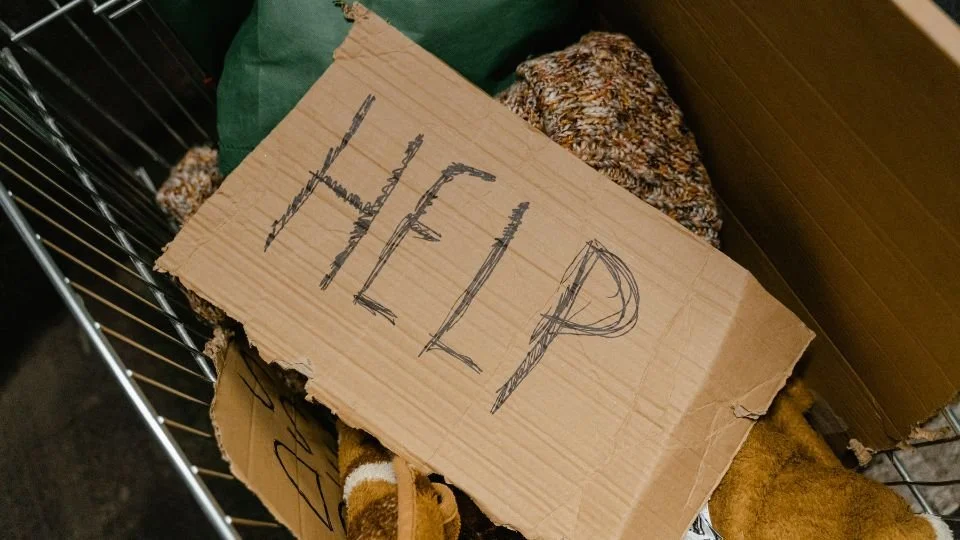
Rev. Fikki realized he “should probably be monitoring” this winter shelter. The Unity Southeast community got together a group of volunteers, which are now on the staff. Every winter there are over 40 people on part-time or full-time payroll that just do the shelter work. The community has a total of over 100 volunteers to help support people overnight or come in to serve breakfast or lunch or dinner or to sort through and organize clothing donations. The community provides mattresses, sheets, blankets, and warmth to the houseless in cold weather. They regularly open the church building as a shelter on December 1st until March 1st. It is open any other time the temperature dips below 32 degrees.
I asked Rev. Randy about how he got the word out to the community about the food giveaways and the shelter. I asked, “did you or someone else do it or did it just get out by itself?”
“It pretty much got out by itself,” he replied.
I said I noticed that his work was frequently covered by the local media. He mentioned that his work had been covered on CNN as well as local news. He thought that because the news media covers some “less than ‘Christ-like’ behavior of some ministries, the media also looks for examples of good religious work. “I think we are a great example for the media of what Christ-like might look like,” he said.
I asked, “Did you or someone else contact the news media about your programs?”
“They just found out about it,” he said, “We’ve been doing this since 2018. Anytime there is controversy or anytime there is national news or local news we are contacted and we’re asked what do you have to say about this or what are you doing about this or how are you standing in the gap. Because they know that is who we are as a community. I use the word community more than I use the word ‘church’ because I think that, rightfully so, the word “church” has gotten a bad name.”
Rev. Fikki went on to say, “Other organizations know that this isn’t something that Unity Southeast is doing just for the next week or next month; they know that it is long-term. So I’ve had a lot of other organizations get involved. We now have paid staff that are paid by individual philanthropy and the city government. We get funding from outside sources to make sure we can run the programs that we run. We have a lot of volunteers that are part of the congregation. We also have a lot of volunteers who have never stepped in on Sunday morning, but they are there 4 to 10 hours every week doing other programs.”
I asked him if there was anything else he’d like to share with our Unity South Central Newsletter readers. Rev. Fikki thought a moment and then said:
“We have more than 14,000 dinners that we are providing in three months: beds and sheets and blankets and pillows. Would you put in the link unitysoutheastinkc.org/shelter For $20 someone can go on our Amazon Wishlist and have soup delivered to 30 people or for $6 they can buy Ramen noodles and that feeds 10 people. The reason we are able to do this is because of other groups in the community stepping up and helping and there’s so much more to be done. If you’d like to support the work that’s being done at Unity Southeast here’s a simple way you can help. I want what we’re doing to be duplicated in every church that feels called to do it. I’d like people to come out for a few days to look at what we’re doing and go back and do it better than we’re doing it.”
Do you have a Unity program to share? Contact the USCR board to have your program featured in an upcoming USCR newsletter.